Sponsored link
DrillForAnime
Resource planning

Drill for Anime Resource Calculator

Cash planning for the drill-character-Cash loop: boost math, offline projections, and the spending order that turns one windfall into a faster loop.

Quick answer: spend windfalls on the loop, not the gamble

Drill for Anime has one currency and three multipliers on it. Everything you earn flows through Cash; drill power, character levels, and offline time decide how fast it flows. So resource planning here is mostly sequencing: redeem the reported codes (LUCK26's 50% boost goes over an active hour; EPIC's 75K is a flat payment worth most early), convert that Cash into drill speed and depth first, character levels second, and treat Lucky Block openings as the bonus round. The worked examples below use only documented rewards plus your own measured rates — where the game shows you a number on screen, trust your screen over any guide.

Worked examples

Three planning calculations, step by step

The code rewards are documented (tracked as of 2026-10-05); the hourly rates are your inputs — the game displays your Cash totals.

1. The boost hour

LUCK26 pays 50% more Cash for 1 hour. Measure one normal drilling hour first — say 40,000 Cash. The boosted hour then pays 60,000: the boost converts your measured rate into a 20,000 Cash gain. The example scales with you — a 100,000-Cash hour gains 50,000, a 15,000-Cash hour gains 7,500. Because the reward is a multiplier, the only wrong move is redeeming it and then spending the hour idling in menus or shopping for upgrades.

2. The windfall conversion

EPIC pays 75K Cash plus an Epic Lucky Block. Convert it to hours to feel its weight: at an early-game 20,000 Cash per hour it is nearly four hours of grinding; at 100,000 per hour it is under one. That conversion tells you when to redeem — early, when 75K equals real progress, rather than late, when your loop out-earns it. The Epic Lucky Block rides along either way; open it after the Cash is spent on upgrades, so a good drop lands on an already-stronger account.

3. The offline projection

The game pays Cash while you sleep, with a documented cap that scales with your units and drill progress. Plan it from the two ends: measure Cash-per-minute right before logging off, and treat the offline payment as a fraction of an active hour rather than a full night's rate. The actionable rule — finish your session on your strongest configuration, because the cap rewards the setup you leave running, not the one you had at lunch.
Decision checklist

Before you spend a session's Cash

The five checks that keep spending on the loop, in the order the community wiki documents.

StepWhat it buys you
1. Redeem codes firstLUCK26 and EPIC cost nothing and pay either a 50% Cash boost for an hour or 75K Cash plus an Epic Lucky Block. Free Cash before any grind changes what you can afford on day one.
2. Push drill power (speed and depth)The fan wiki's first-session order puts drill upgrades right after codes: a faster, deeper drill raises everything the loop pays, including what you earn while offline.
3. Commit to one strong characterThe wiki's collection advice is to upgrade your highest-rarity unit first — one strong leveled character pays more Cash than several low-level ones.
4. Open Lucky Blocks on a scheduleTreat block openings as a bonus step after the free upgrades, not as the plan itself. Tiered drops mean most openings are filler around the Epic-tier chase.
5. Set up offline income, then log outBecause offline Cash is capped and scales with your setup, the wiki recommends measuring your Cash-per-minute right before logging off — the cap rewards logging out on a strong setup, not idling forever.
Interpreting results

Reading your own numbers honestly

Trust the screen, date the guide

The experience last updated on October 3, 2026 (re-checked 2026-10-05) and the developer publishes no balance notes, so any published price or rate can lag the live game. When your screen disagrees with a guide — this one included — your screen wins and the guide waits for its next check.

Servers are small; rates are personal

With 6 players per server, your loop is not competing with a lobby for spawns or income. That makes personal measurement reliable: three measured hours beat any universal rate a guide could quote.

Re-measure after updates

Drill pricing, level payouts, and the offline cap are exactly the numbers a silent rebalance moves. After every update, re-run one benchmark hour before committing to long sessions — the updates page lists what to recheck each time.

FAQ

Resource questions

How does Cash work in Drill for Anime?

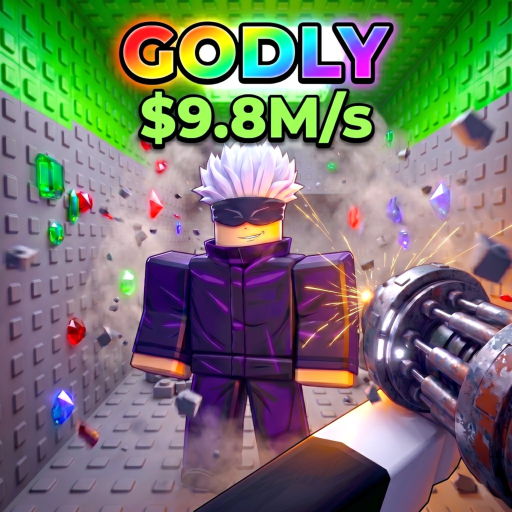
Cash is the single currency: drilling through dirt pays it, fighting and leveling anime characters raises your rate ("Level Up your Characters and get more CASH!"), and the game pays offline Cash while you sleep. Drill power — "smash deeper & dig faster" — multiplies what every other part earns. (Official listing, checked 2026-10-05.)

How much does the offline (sleep) income pay?

The community wiki documents that offline income is capped and that the cap scales with your units and drill progress — so there is no single number to publish. The practical planning rule: measure your Cash-per-minute just before logging off, because a strong setup keeps earning up to its cap while a weak one stops early.

Which Cash boosts exist right now?

Two reported code rewards, checked 2026-10-05: LUCK26 (50% more Cash for 1 hour — a multiplier) and EPIC (75K Cash plus an Epic Lucky Block — a flat payment). Plan multipliers over active hours and flat payments early, when they equal more hours of grinding.

What should I do with a windfall like the 75K from EPIC?

Follow the documented spending order: drill power first (speed and depth), then your strongest character's levels. Both raise every future Cash payment — including the offline share — which is why they beat opening Lucky Blocks or spreading Cash across a wide bench.

Why can't this page give exact upgrade prices?

Nomel Studios publishes no stat tables, and no community source has documented drill upgrade pricing by depth or level costs by tier. The calculator works from your in-game numbers instead; when a real cost table surfaces, the projections here will use it.

Related pages

Check these before spending